Forklift Daily Inspection Checklist

A pre-shift inspection checklist covering the items OSHA 1910.178 requires operators to examine. Print it for the clipboard or run it from a phone — free, no signup.

Works in Excel & Google Sheets
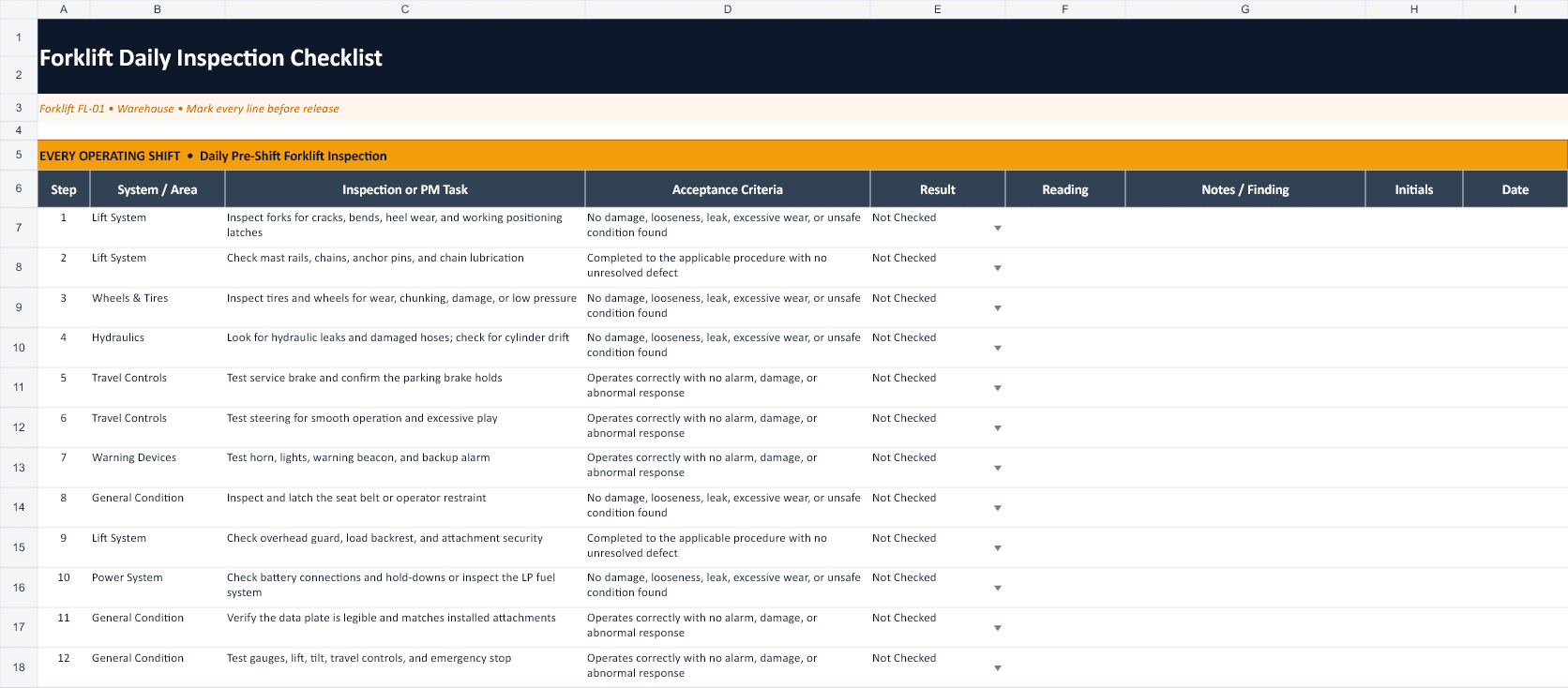
ItemWhat to CheckOKDefect FoundNotes
ForksCracks, bends, wear at the heel, positioning latches engage
Mast & chainsChain wear and lubrication, kinks, anchor pins, mast rails
Tires & wheelsWear, chunking, pressure (pneumatic) or damage (cushion)
HydraulicsLeaks, hose condition, cylinder drift under load
BrakesService brake stops smoothly; parking brake holds
SteeringSmooth, no excessive play or unusual noise
HornWorks and is loud enough for the environment
Lights & beaconsHeadlights, warning beacon, backup alarm functional
Seat belt / restraintPresent, latches, retracts, webbing not frayed
Overhead guardNo damage, bends, or missing hardware
Battery or LP systemElectric: charge, connections, hold-downs. LP: leaks, tank mounting, relief valve
Fluid levelsEngine units: oil, coolant, fuel; check for fresh leaks under truck
Data plateLegible and matches attachments in use
Gauges & controlsAll gauges read normal; lift, tilt, and travel controls respond correctly

Preview of the full checklist. The OK, Defect Found, and Notes columns are left blank for the operator to fill in each shift.

Why pre-shift forklift inspections are required

OSHA's powered industrial truck standard, 29 CFR 1910.178, requires that trucks be examined before being placed in service — at least daily, or after each shift when the truck is used around the clock. The standard is equally clear about the outcome: a truck found to be in need of repair, defective, or in any way unsafe must be taken out of service until it has been restored to safe operating condition. The checklist above covers the items that examination should touch on a typical lift truck, whether electric or internal combustion.

How to run the inspection in under 3 minutes

  1. Walk around first, truck off. Forks, mast and chains, tires, overhead guard, data plate — and a quick look under the truck for fresh leaks. About 90 seconds.
  2. Check the power system. Electric: battery charge, connections, hold-downs. LP: tank mounting and any smell of gas. Engine units: oil, coolant, fuel.
  3. Start it and test the operational items. Brakes (service and parking), steering, horn, lights, gauges, and lift/tilt controls. Buckle the seat belt to confirm it latches and retracts.

Done consistently, the whole routine takes less time than a coffee refill — and it's the routine that catches a leaking hydraulic hose before it becomes a dropped load.

What to do when a defect is found

Don't note it and drive anyway. Tag the truck out, pull the key, and report the defect to whoever dispatches repairs — the truck stays out of service until it's fixed and verified. The best operations turn each defect into a work order the moment it's found, with a photo and the operator's note attached, so nothing lives only on a clipboard. If you're tracking a whole fleet this way, see our guide to fleet maintenance tracking for how to keep defect history, repairs, and PMs in one place per truck.

Electric vs. internal-combustion checklists

Most of the checklist is identical, but the power section differs. On an electric truck, check the battery's charge level, cable and connector condition, and that hold-downs are secure — and watch for electrolyte on top of the battery. On an LP truck, check the tank mounting, hose and fitting condition, and for any smell of propane. On diesel or gas units, add fluid levels — engine oil, coolant, fuel — and a look at belts and the exhaust system. The CSV's “Battery or LP system” and “Fluid levels” rows cover both; delete whichever doesn't apply to your fleet.

Frequently asked questions

How often does OSHA require forklift inspections?

OSHA 1910.178 requires industrial trucks to be examined before being placed in service — at least daily, or after each shift when the truck is used around the clock. In practice that means a pre-shift inspection every day the forklift operates, and once per shift for multi-shift operations.

Do forklift inspections need to be documented?

OSHA 1910.178 requires the examination itself, not a specific written form. But a documented checklist is the practical standard: it proves the inspection happened, creates a defect history for each truck, and is what OSHA inspectors and insurers ask to see after an incident. A signed daily sheet — paper or digital — is cheap insurance.

What happens if a defect is found during a forklift inspection?

Under OSHA 1910.178, a truck found to be in need of repair, defective, or in any way unsafe must be taken out of service until it has been restored to safe operating condition. Tag the truck out, remove the key, report the defect, and don't return it to service until the repair is verified.

Put this checklist on every operator's phone

RunTight gives operators this checklist on their phone — scan the truck's QR code, tap through, and defects become work orders with photos. Free for teams up to 25.

Get Started Free