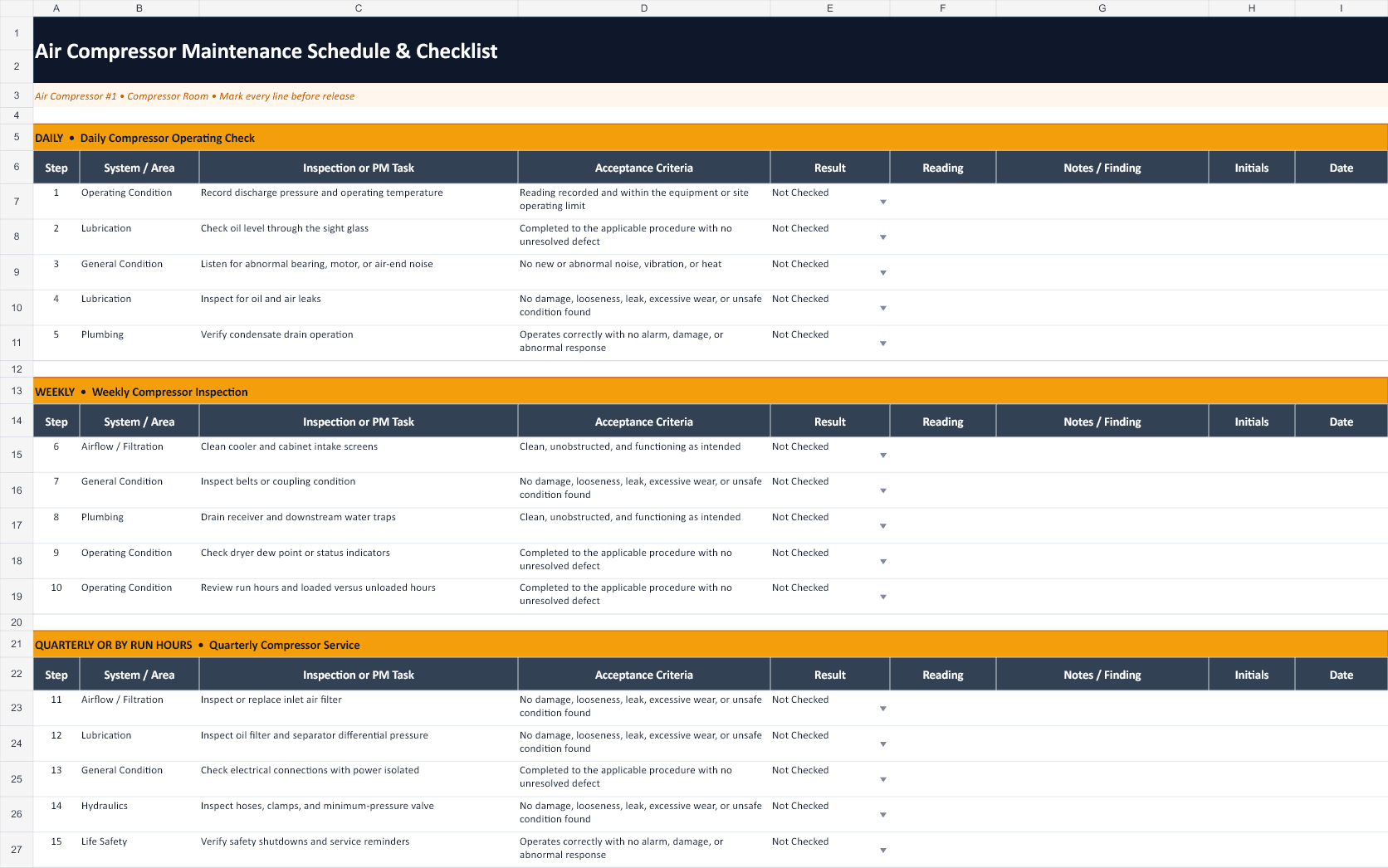
Daily
Daily Compressor Operating Check
- Record discharge pressure and operating temperature
- Check oil level through the sight glass
- Listen for abnormal bearing, motor, or air-end noise
- Inspect for oil and air leaks
- Verify condensate drain operation
Free template · Machine shops, manufacturing, and facilities
Daily, weekly, monthly, quarterly, and annual checks for a typical rotary-screw shop air compressor. Download the formatted Excel workbook, print the field PDF, or put the complete schedule into RunTight.
Ready-to-use schedule
Start with these intervals, then adjust them using actual run hours, condition, failures, and manufacturer guidance.
Daily
Weekly
Quarterly or by run hours
Compressor service intervals vary with model, oil type, temperature, dust, and load profile. Record run hours at every service and use the manufacturer interval when it is shorter than this starting schedule.
High discharge temperature, rising separator differential pressure, or a growing loaded-hour percentage are early warnings. Treat those readings as maintenance signals instead of waiting for a shutdown.
Before opening panels or servicing pressure-containing components, isolate electrical power, relieve stored pressure, and follow your lockout procedure.
Follow the compressor and lubricant manufacturer interval because synthetic and mineral oils differ substantially. Track both calendar time and run hours, and use whichever limit arrives first.
At minimum record run hours, loaded hours when available, discharge pressure, discharge temperature, oil level, and dryer status. Trends are usually more useful than a single reading.
A failed drain lets water accumulate in the receiver and air system, increasing corrosion and contaminating downstream tools and processes.
Add it to RunTight, assign it to equipment, and automatically send each occurrence to the right phone. The Free plan supports up to 25 users—no credit card or per-user fee.
Use this template free