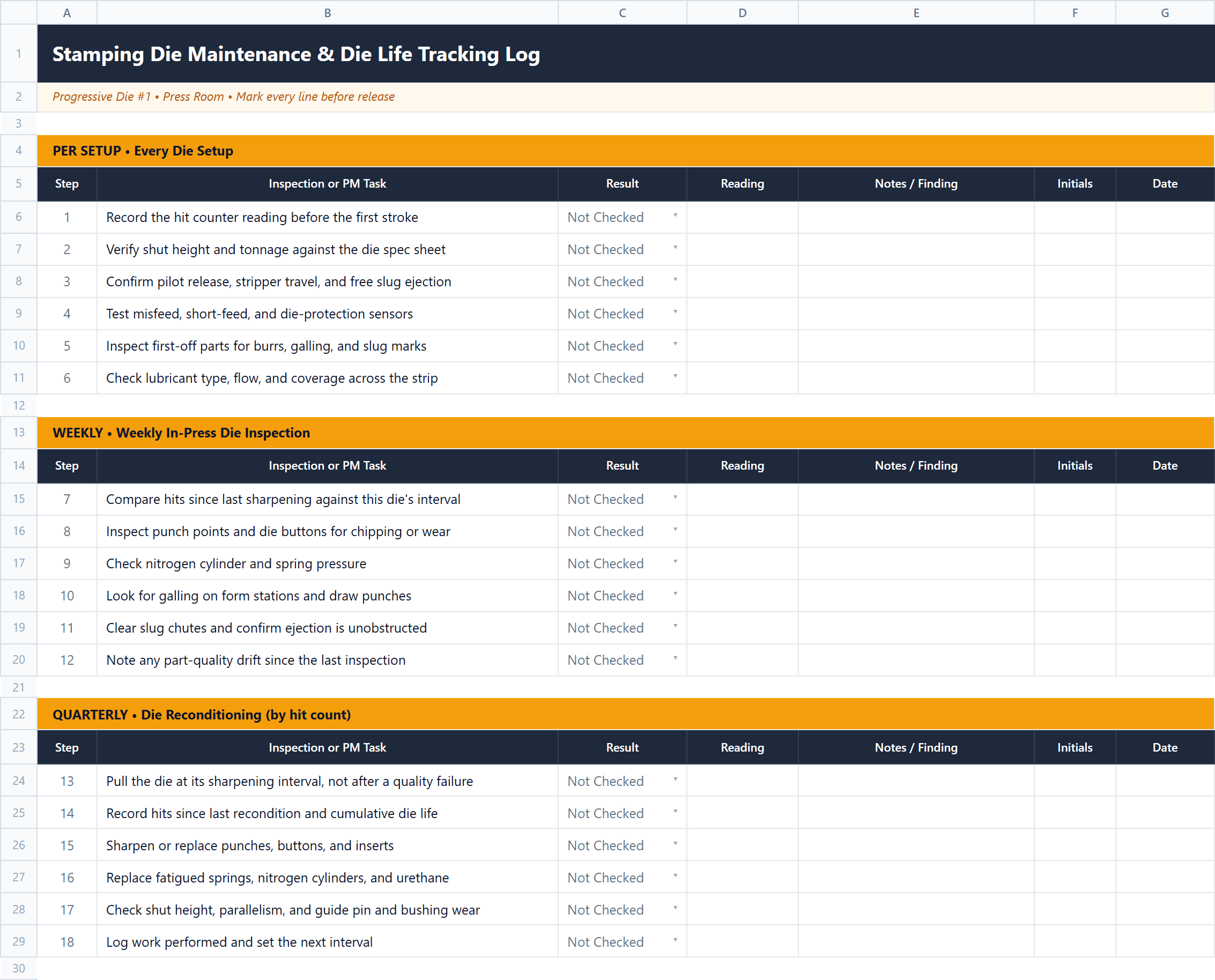
Stamping dies wear by use, not by date. A die running 40,000 hits a week and one running 4,000 reach a monthly PM on the same day, and only one of them needs it. Reading the hit counter at every setup and teardown keeps the interval that actually matters — hits since the last sharpening — in front of whoever schedules the press.
The fields that make die life manageable are the ones this log keeps side by side: die number, press, hit counter reading, hits since last recondition, cumulative hits, target die life, and what was done at each reconditioning. Without cumulative hits and a target to compare them against, "how much life is left in this die?" stays a guess.
Reconditioning history is what turns the log into a forecast. After two or three cycles the hits-per-sharpening figure for each die is real data rather than the builder's estimate, and tooling work can be scheduled around the production plan instead of around a burr that showed up mid-run.